


What Makes an IP Look Like It’s Part of a Residential Proxy Pool
Get Unlimited Access to IPinfo Lite
Start using accurate IP data for cybersecurity, compliance, and personalization—no limits, no cost.
Sign up for freeResidential IP addresses were once considered a strong indicator of legitimate human traffic. Today, that assumption no longer holds.
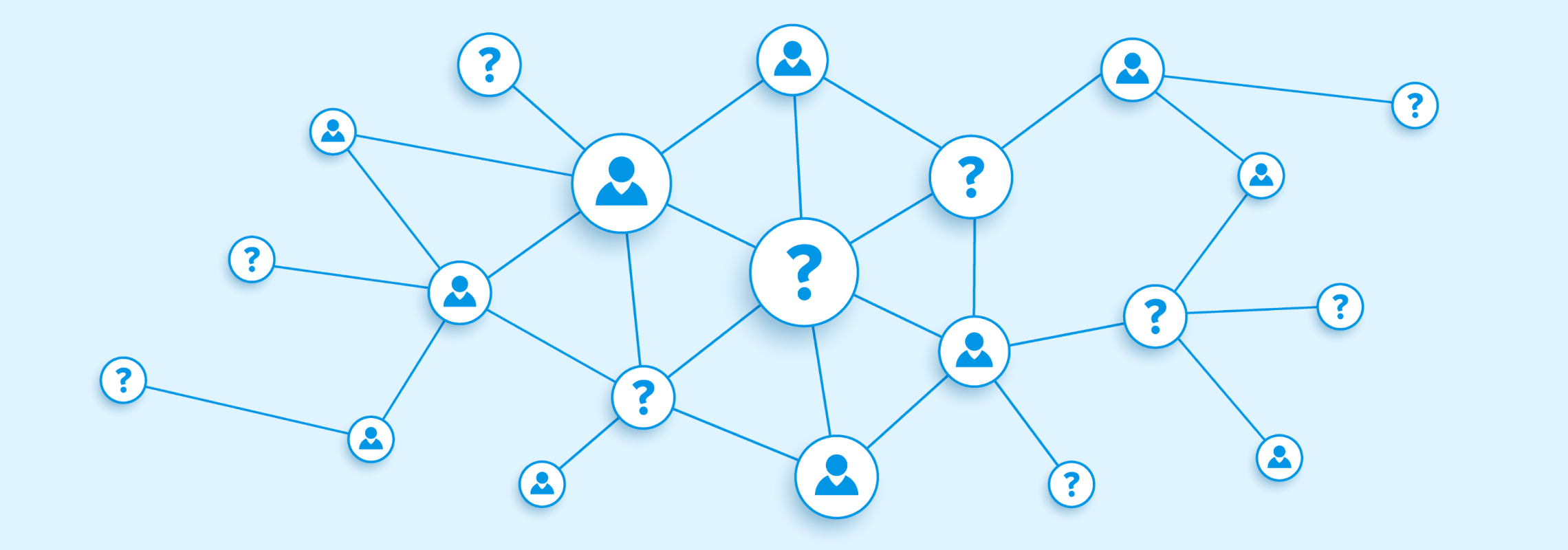
Modern residential proxy networks are deliberately designed to blend into everyday consumer internet activity. They route traffic through real households, mobile devices, and shared broadband connections, often mixing genuine user behavior with automated or third-party traffic.
See how everyday users unknowingly become part of residential proxy networks.
For AdTech, fraud prevention, and cybersecurity teams, the challenge isn’t identifying “bad IPs.” It’s determining when a real residential IP is actively being used as proxy infrastructure.
That distinction requires evidence.
Why Residential Proxy Detection Is Hard
Residential proxy traffic is difficult to detect because, by design, it looks normal:
- It originates from consumer ISPs rather than hosting providers
- It often shares IP space with legitimate users
- It changes constantly as providers rotate infrastructure and resell access
Adding complexity, the residential proxy ecosystem is fragmented. Many providers operate multiple sub-brands with overlapping IP ranges, and IPs can move between services or resellers over time. Providers also actively adapt to detection efforts, limiting visibility into which IPs are active at any given moment.
In this environment, static blocklists and single-signal heuristics are insufficient.
How IPinfo Detects Residential Proxy IP Addresses
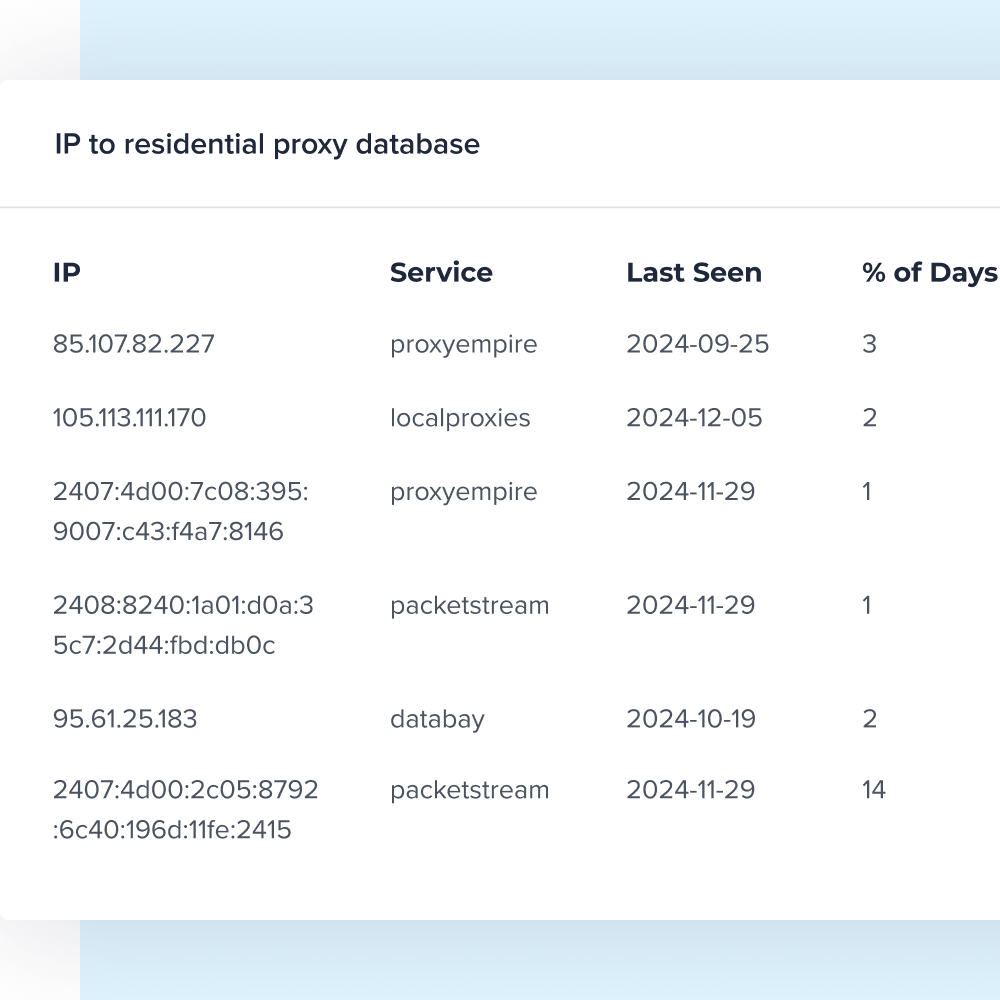
To go beyond behavioral signals, IPinfo subscribes to and actively uses hundreds of residential proxy services as a registered participant. By routing real network traffic through these services, we can:
- Directly verify which IP addresses are actively being used by residential proxy networks
- Confirm proxy routing through observed communication packets
- Associate IPs with specific proxy services
- Record when proxy usage was last observed
This step is foundational. Rather than inferring proxy usage, IPinfo verifies it through direct observation of live proxy routing.
An Advanced Layer of Privacy Detection
An enterprise-grade signal for detecting hard-to-spot residential proxies
From Detection to Reliable Categorization
Not all proxy infrastructure behaves the same way. IPinfo provides categorical distinctions that reflect real-world differences in how traffic is routed:
- Residential proxies
- Mobile / carrier-grade residential proxies
- Datacenter proxies
This granularity allows downstream systems to apply context-appropriate policies rather than treating all proxy traffic as equivalent.
Because proxy infrastructure changes rapidly, IPinfo’s residential proxy dataset is updated daily to reflect newly observed IPs, changes in usage, and IPs that are no longer active.
Residential proxy data is available via API or database download. The offline data is available in formats such as CSV, Parquet, and MMDB, enabling direct integration into analytics, fraud detection, and enforcement workflows.
How to Use Residential Proxy Signals Effectively
Even with verified detection, residential proxy data should be treated as risk context, not a definitive verdict.
Best practices include:
- Combining proxy signals with behavioral, device, and account-level indicators
- Applying graduated responses based on persistence and confidence
- Avoiding blanket IP blocking that penalizes legitimate users on shared infrastructure
Residential proxy detection is most effective when it improves understanding of traffic conditions.
The Growing Risk of Residential Proxies
Residential proxy traffic is an ever-growing structural feature of the modern internet.
By combining active measurement, direct residential proxy verification, and independent intelligence, IPinfo enables teams to distinguish between ordinary shared infrastructure and sustained residential proxy routing, so decisions are grounded in evidence.
Share this article


About the author

Abdullah leads the IPinfo internet data community and he also works on expanding IPinfo’s probe network of servers across the globe.